Curriculum
Curriculum Intent
Our curriculum is designed with clear priorities that align with our school vision and values: Together we discover, believe & achieve. Our curriculum plays a vital role in shaping our school culture. It reflects our commitment to:
- High Aspirations: We encourage all pupils to aim high, fostering resilience, independence, and a strong work ethic.
- A Love of Learning: Lessons are engaging, meaningful, and inspire curiosity.
- Broad and Balanced Learning: Every child has access to a wide range of subjects and experiences to enrich their learning and personal development.
- Character Development: We embed values such as respect, kindness, and responsibility into our curriculum.
- Inclusion and Equity: Our curriculum meets the needs of all learners, celebrating diversity and ensuring every child can achieve success.
- Community Engagement: We provide real-world learning opportunities, including visits, workshops, and partnerships with local organisations.
- Cultural Capital: We ensure that pupils gain the knowledge, skills, and experiences needed to engage with the wider world. Our curriculum helps pupils understand different cultures, histories, and perspectives, preparing them to be responsible global citizens.
- Preparation for Life: We equip pupils with essential life skills, including problem-solving, communication, collaboration, and critical thinking.
A Curriculum for the Whole Child
At Farnham Primary School, we recognise the importance of personal development alongside academic success. Our curriculum supports children not only academically but also spiritually, morally, socially, and culturally. Through the experiences we offer, our children develop a strong sense of self, pride in their school and community, and an understanding of the diverse society they belong to.
Our Approach to Curriculum Design
At Farnham Primary School, our aim is to develop our children into the scientists, historians, geographers, and artists of the future through a carefully designed, ambitious curriculum. We believe that every child should not only succeed academically but also grow personally and socially to lead fulfilled, happy, and successful lives.
Art & Design

At Farnham Primary School, children will be inspired to develop their knowledge and skills and experiment in order to become confident and innovative artists. Children are given every opportunity to develop their ability, nurture their talent and interests, express their ideas and thoughts about the world, as well as learning about art and artists across cultures and through history.
We use the Kapow scheme of learning which supports pupils to meet the National curriculum end of key stage attainment targets and has been written to fully cover the National Society for Education in Art and Design’s progression competencies.
Our Art and Design scheme supports pupils to meet the needs of the national curriculum end of key stage attainment targets, and has been written to fully cover the National Society for Education in Art and Design’s progression competencies. We follow Kapow Primary which is an Artsmark partner, inspiring children and young people to create, experience and participate in great arts and culture.
Computing

We want children to be masters of technology. Technology is everywhere and will play a pivotal part in children’ lives. We aim to model and educate our pupils on how to use technology positively, responsibly and safely. We want our children to be creators not consumers and our broad curriculum encompassing computer science, information technology and digital literacy teaches this.
Our vision is for every child at Farnham to be fluent with a range of tools to best express their understanding and hope by Upper Key Stage 2, children have the independence and confidence to choose the best tool to fulfil the task and challenge set by teachers.
We follow the DARES curriculum which fulfils the statutory requirements outlined in the National curriculum (2014). This curriculum develops the three areas of computing; Computer Science, Information Technology and Digital Literacy.
It is our aim that all of our children are confident users of technology, have a secure and comprehensive knowledge of the implications of technology and digital systems and know the importance of technology in the ever-changing world around them.
Design Technology

We aim to inspire our pupils to be innovative and creative thinkers who develop technical, practical and imaginative skills to perform everyday tasks confidently. We want all our children to build skills to design and make products that solve real and relevant problems within a variety of contexts.
We use the Kapow scheme of learning which supports pupils to meet the National curriculum end of key stage attainment targets. Children will learn the value of considering their own and others needs, wants and opinions, and how this allows them to critique, evaluate, and test their ideas and products and the work of others.
We aim to build an awareness of the impact of design and technology on our lives and encourage our pupils to become resourceful, enterprising citizens who will take their skills throughout their life.
Geography

We aim to inspire children to become curious and explorative thinkers with a good understanding of the world. We want our children to think like a geographer. We want children to develop the confidence to question and observe places, measure and record necessary data in various ways, and analyse and present their findings.
We follow the Kapow scheme of learning for geography. Through our scheme of work, we aim to build an awareness of how geography shapes our lives at multiple scales and over time. We hope to encourage children to become resourceful, active citizens who will have the skills to contribute to and improve the world around them.
It is our aim that all of our children become curious and inspired geographers with respect and appreciation for the world around them alongside an understanding of the interconnection between the human and the physical. Through geography, our children will build on their social skills through collaborative fieldwork, encouraging teamwork and communication which are skills for life.
History

We aim to inspire pupils to be curious and creative thinkers who develop a complex knowledge of local and national history and the history of the wider world. We want pupils to develop the confidence to think critically, ask questions, and be able to explain and analyse historical evidence.
We use Kapow’s scheme of learning for our history curriculum. Through Kapow’s history scheme of work, we aim to build an awareness of significant events and individuals in global, British and local history and recognise how things have changed over time. History will support children to appreciate the complexity of people’s lives, the diversity of societies and the relationships between different groups. Studying history allows children to appreciate the many reasons why people may behave in the way they do, supporting children to develop empathy for others while providing an opportunity to learn from mankind’s past mistakes. Kapow Primary’s history scheme aims to support pupils in building their understanding of chronology in each year group, making connections over periods of time and developing a chronologically-secure knowledge of history.
We provide children with opportunities to experience history first hand through educational visits, artefacts and resources and high quality teaching. It is our aim that all of our children leave school equipped with a range of skills to enable them to succeed in their future education. We aim for all children to be enquiring learners who ask questions and can make suggestions about where to find the evidence to answer the question. They will be critical and analytical thinkers who are able to make informed and balanced judgements based on their knowledge of the past.
Maths
At Farnham Primary School, we believe that every child is a mathematician and we acknowledge that mathematics is essential for everyday life, to help them to understand and engage with our world. We enable our learners to become fluent in the basics of arithmetic and help them to learn the skills of thinking creatively, reasoning mathematically and solving problems.
Our vision is for every child at Farnham to develop confidence in their own mathematical ability and to experience enjoyment in the subject.
The curriculum we offer is built upon the principles of Teaching for Mastery and adapted from the White Rose Maths Scheme of Learning. Pupils in Reception and KS1 also access a daily Mastering Number session.
To achieve our vision, you can expect to see our children developing their use of mathematical language through speaking and listening, including reasoning, justifying and explanations. The mathematics journey begins in Reception, where a multitude of learning activities are available to help the children develop secure number sense, spot patterns and recall basic number facts. A focus on practical activities using concrete resources helps the children to learn the fundamentals of number and make links between key facts. As the children’s journey moves into KS1, the teaching of mathematics continues with exposure to varied images, as well as a greater expectation on written recording. It is our aim that all of our children leave Farnham Primary School with secure calculation skills and are able to apply their mathematical understanding in a variety of contexts, readying them for secondary school and the world of work.
Multiplication Facts/Times Tables
We recognise that having secure fact recall is essential for children to be fluent and to progress in maths. At Farnham, we use Numbots and Times Table Rockstars to support children with their learning of number bonds and multiplication facts. At the end of year 4, all children will be assessed using the national Multiplication Timestable Check.
How Can You Help At Home?
If you can encourage your child to play Numbots or TT Rockstars for 10 minutes every day on a phone, table or laptop, you will see how quickly they will progress!
These workbooks are free to download and are a brilliant way for your child to enjoy maths at home. Click on the picture or link below to head to the White Rose website.
https://whiteroseeducation.com/parent-pupil-resources/maths/free-downloads#download
This website gives useful tips and advice on supporting your child at home. https://home.oxfordowl.co.uk/maths/
Learning of maths content such as telling the time, money and measurement can be reinforced at home with real-life activities E.g. weighing ingredients when cooking, helping your child to know the times when things happen and counting out money to pay for things.
Modern Foreign Languages
Being able to communicate with others is a key life skill. At Farnham Primary School, pupils are shown that learning a foreign language is an important part of being a member of a multi-cultural society and provides an opening to exploring and understanding other people’s lives. We aim to develop pupil’s natural curiosity to explore other countries, cultures and languages beyond those that they are geographically exposed to, whilst developing their ability to communicate effectively in a range of different ways.
Pupils are taught French throughout Key Stage 2 using the Language Angels scheme and will be equipped with the skills and techniques to learn other languages in the future. Pupils are encouraged to have the confidence to communicate for practical purposes, both in speaking and writing. They are shown that speaking a different language requires you to adapt, use skills resourcefully and learn new ways of thinking. Through a range of songs, activities, videos and interactive resources pupils will be engaged in the challenge of finding ways to express their thoughts and be prepared to continue language learning for life.
Lessons are taught using pronunciation videos, songs, drama opportunities and written practice, allowing the children to practise their skills in many different ways.
Music
At Farnham Primary School we believe that music is a universal language that embodies one of the highest forms of creativity. We want all children to have access to a high-quality music education, which should engage and inspire pupils to develop a love of music and their talent as musicians, and so increase their self-confidence, creativity and sense of achievement.
We follow the Charanga scheme of learning which focuses on developing the skills, knowledge and understanding that children need in order to become confident performers, composers, and listeners. Our curriculum introduces children to music from all around the world and across generations, teaching children to respect and appreciate the music of all traditions and communities.
Children will develop the musical skills of singing, playing tuned and untuned instruments, improvising and composing music, and listening and responding to music. They will develop an understanding of the history and cultural context of the music that they listen to and learn how music can be written down. Through music, children develop transferable skills such as team-working, leadership, creative thinking, problem-solving, decision-making, and presentation and performance skills.
Charanga’s music scheme of work enables pupils to meet the end of key stage attainment targets outlined in the National curriculum and the aims of the scheme align with those in the National curriculum.
We intend to inspire children to perform, listen to and review/evaluate a wide range of music. This consists of listening and evaluating, improvising and composing, creating sound and playing instruments, engaging with music, notation and performing. We will use high quality resources from top music education websites and provide opportunities for live music, workshops and visitors to school to perform for the children.
FPS Music Development Plan Summary
Physical Education
At Farnham Primary School we recognise that physical activity and sport are essential parts of a child’s everyday life and are a key factor in their future wellbeing. We want every child to find enjoyment in physical activity and aim to provide them with a wide range of opportunities so that they can discover the right kind of activity for themselves and experience the benefits that an active lifestyle can provide.
Through their Physical Education (PE) lessons, we aim to present them with opportunities to compete against themselves and others, work in partnerships and teams, build self-confidence and perseverance and the real sense of achievement that this particular aspect of a child’s education can provide. A key part of this will be to engage their enthusiasm and provide them with the necessary skills and experiences in order for them to be in the best position possible to further engage in physical activity and sporting opportunities as their educational and life journey continues beyond their time at Farnham. Our aim is to prepare and support pupils towards healthy and active lifestyle choices for their future mental and physical wellbeing.
PSHE & RSE
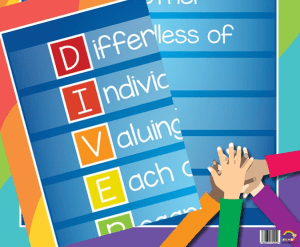
Personal, Social, Health Education including Relationship Education
At Farnham Primary School, Personal, Social, Health Education including Relationship Education is taught through The Story Project and Pol-Ed. The Story Project is based on high-quality research and has a love of books and passion for reading at the heart of the curriculum alongside high quality PSHE. Pol-Ed is an educational program created by West Yorkshire Police and provided to all schools in West Yorkshire which covers a range of topic areas across PSHE. In addition to this we also have Forest School to provide our children with a rounded PSHE curriculum.
The Story Project
The Story Project teaches PSHE through books, these books cover content that cover 6 key themes.
Each key theme progresses through the primary journey, deepening and stretching children’s skills and knowledge by fostering empathy and understanding. By the end of primary school, children will have been exposed to characters and stories that enlighten, challenge, support and empower them. This helps to develop a toolkit of wellbeing skills that will stay with children as they grow.
Diversity and Representation
The books used to teach the curriculum through The Story Project were chosen carefully to ensure that they give an authentic account of different experiences. They reflect diverse characters and stories which enable all children to see themselves in the pages of the books.
The books purposefully and intentionally inspire discussion and different opinions. The opportunity for open conversation is an important part of children developing empathy and understanding of respectful relationships. This means covering positive representations of diversity as well as how some groups of people are discriminated against. This is covered sensitively and in an age appropriate way. Using books to do this means that children are distanced from the topic and can approach the conversation safely without judgement.
Protected Characteristics
The Story Project books have been chosen to provide an authentic account of different experiences and backgrounds. We pride ourselves on using stories to promote equality and challenge discrimination.
Pol-Ed
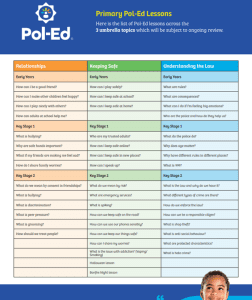
Pol-Ed has three key themes; Relationships, Keeping Safe and Understanding the Law as well as additional themed lessons on key topics such as anti-bullying, knife crime, online safety and road safety. Pol-Ed provides children with an increased knowledge and awareness of risk, greater awareness of community issues and how to keep themselves safe as well as more knowledge of the police and their role in society as trusted people.
Safeguarding
Safeguarding is at the core of every PSHE lesson. We consistently remind pupils to reach out to a trusted adult if they feel concerned about any topics discussed.
Forest School
At Farnham Primary School we are lucky to have Miss Hare who is fully trained to teach Forest School. Pupils spend time with Miss Hare in our ‘Forest’ learning all about our wonderful outdoors, to respect the environment we live in and creative ways to spend time outside including building dens, lighting fires, whittling and creating art.
Phonics & Early Reading
Learning to read and discovering the joy of books
We learn to read so that we can read to learn. Learning to read is a right for all children and gives them a pathway to a more successful future.
At Farnham we believe that as well as the teaching of the skills needed to decode and understand books, we aim to encourage and nurture a love of reading. Reading takes us to new lands, makes us interact with new characters, helps us understand how others are feeling and gives us information we need on subjects that interest us.
We see reading as the foundation to learning across all subjects and a child cannot fulfil their potential without becoming a competent reader. Additionally, we are determined that every child will enjoy books and develop a love of reading.
Early Years
We provide a balance of child-led and adult-led experiences for all children that meet the curriculum expectations for ‘Communication and language’ and ‘Literacy’. These include:
-
- sharing high-quality stories and poems
- learning a range of nursery rhymes and action rhymes
- activities that develop focused listening and attention, including oral blending
- attention to high-quality language
We ensure Reception children are well prepared to begin learning grapheme-phoneme correspondences (GPCs) and blending in Reception.
Phonics
Children make a strong start in Reception: teaching begins in the Autumn term. We use the DFE validated Read, Write, Inc. programme to ensure a successful start for all our children. Phonics happens daily in EYFS and KS1 with keep up and catch up sessions happening across the school to enable all children to develop as fluent and confident readers.
We teach phonics for 45 minutes each day. In Reception, we begin with 10-minute lessons, supported by daily oral blending games, and build up to the full-length lesson as quickly as possible. Each Friday, we review the week’s teaching to help children become fluent readers.
Children in Year 1 sit the statutory Phonics screening check in June. Any child not passing the check re-sits it in Year 2.
Fast Track Tutoring
Any child who needs additional practice receives daily Fast Track support delivered by a fully trained adult. Fast Track sessions follow the same structure, procedures, resources, and mantras as class teaching, but move in smaller steps with more repetition to ensure every child secures their learning.
We also timetable a Speed Sound session each afternoon for Years 1 and 2 to support children in reading words and sounds. We use the Read Write Inc. assessments to identify gaps in phonics knowledge and address these using the portal videos.
Key Stage 2
If any child in Years 3 or 4 has gaps in their phonics knowledge when reading or writing, they continue to attend phonics sessions until they have completed the Read, Write, Inc. programme.
Pupils in Years 5 and 6 who still require phonics support follow the Fresh Start programme, which helps older struggling readers to read accurately and fluently with good comprehension. This programme uses age-appropriate, decodable texts that are both engaging and motivating.
Home reading
Children who access phonics each day, take home a book each Friday that matches the sounds they have been taught in class. To ensure reading success, it is important that reading happens regularly at home and that books are shared with the family.
In addition to their phonics reading book, children also take home a reading-for-pleasure library book each week for parents to share and read aloud with them.
Reading
At Farnham Primary School, we believe that reading is an integral part in a child’s understanding and appreciation of the world around them; a platform that allows our children to see beyond what they know, share in cultural experiences and develop the vocabulary they need to effectively express themselves. Our reading curriculum strives to foster a lifelong love of reading. This curriculum is delivered through synthetic phonics (Read, Write, Inc.), a shared reading approach (KS2) using high quality teaching, carefully selected texts, home reading, reading across the curriculum, regular opportunities for independent reading and listening to quality texts read aloud every day during class story time. All of these are essential components as they offer the range of opportunities needed to develop fluent, enthusiastic and critical readers.
Reading for Pleasure
We aim to foster a love of reading and want to build communities of engaged readers. We are committed to promoting a love of reading in our school, not only giving children opportunities to read in reading sessions but in the wider curriculum too. We participate in regular author events, both in person and virtually. We provide children with opportunities to visit our library spaces across school and read a variety of texts. We share high quality texts within each class as part of our daily routine and our pupil Reading Ambassadors promote a love of reading by recommending books, helping to organize reading events, reading with younger children, and encouraging their peers to read for enjoyment.
Reading lessons
Every pupil in KS2 accesses a daily reading practice session with a clear focus:
-
- Decoding
- Prosody: teaching children to read fluently with understanding and expression
- Comprehension: teaching children to understand the text
Daily reading lessons are based around high quality novels and non-fiction texts showcasing a range of different authors, themes and genres from around the world and follow a structure which enables children to develop important reading skills.
The following elements are always included in reading lessons:
-
- Vocabulary and background knowledge relevant to the text are explicitly taught. Readers are required to build a picture in their minds when reading which allows them to ‘see’ and understand what they are reading, and to achieve this, the teaching of vocabulary is supported with explanation, discussion, role play, pictures, videos and Google Earth (used to view different places mentioned in a text).
- Listening to a story or non-fiction text read by an expert reader at the right pace to encourage engagement; the primary aim being to associate reading with enjoyment.
- Reading fluency: this is an important step between phonics and reading comprehension. Children who read fluently read quickly and easily with the patterns and rhythms of spoken language. Fluency is taught through expert teacher modelling and repeated oral reading – children reading aloud and repeating passages or paragraphs, consciously aiming for fluent reading.
- Text exploration: children are supported to share their ideas about the text and to discuss questions relating to comprehension, inference and authorial intent. Questions raised by the children are discussed and their understanding of the context clarified. Tasks are planned to be engaging and fun, e.g. taking on character roles to explore their motives, working as detectives to use clues in the text to solve a case.
- Beyond reading lessons, spelling and sentence structures are taught to enhance children’s understanding of the texts we share in class.
Home reading
Each child selects a reading book from the age appropriate libraries around school to take home to read either independently or with an adult. Children are encouraged to discuss the texts they are reading both at home and in school.
Religious & Worldviews
At Farnham Primary School, RE is an important curriculum subject. It is important in its own right and also makes a unique contribution to the spiritual, moral, social and cultural development of pupils and supports wider community cohesion. This aligns with our value of community.
Our Religion and worldviews curriculum aims to develop deep thinkers who are open-minded about religion and worldviews. Our curriculum is relevant to pupils, reflecting and preparing them for life in modern Britain. Through the scheme, children will secure a deep understanding of concepts in order to be able to make connections, ask and respond to challenging questions, learn to respect and appreciate worldviews that are different to their own and consider their personal preconceptions, responses and views. Children will build their conceptual knowledge through studying religions and worldviews locally, nationally and globally in our progressive curriculum, enabling them to make links and connections between worldviews, develop disciplinary skills and build on their understanding of their positionality in relation to their learning.
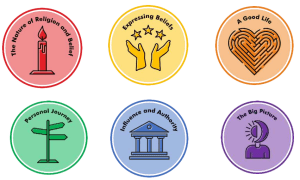
We follow the Pennine Learning West Yorkshire Local Agreed Syllabus – Believing & Belonging and learning is sequenced along six conceptual pathways.
We follow a ‘religion and worldviews approach’ means:
-
- Recognising diversity within and between religions and worldviews.
- Avoiding oversimplification and stereotyping.
- Exploring some worldviews beyond the six faiths mostly studied.
- Including non-religious approaches
- Building in lived experience and real engagement through visits.
- Giving learners opportunities to learn about beliefs that are outside their local area, as well as reflecting local demography.
For EYFS, the lessons allow pupils to work towards targeted ‘Understanding the world’ Development matters statements and Early learning goals, while covering foundational knowledge that will support them in their further Religion and worldviews learning in Key stage 1. In EYFS, children begin to talk about the beliefs of their immediate family and community, recognising that people have different beliefs and celebrate special times in different ways. They listen to religious and modern day stories and compare and contrast characters, including figures from the past. Children develop their awareness of religion and worldviews in Key stage 1, focusing on conceptual knowledge through the study of a limited range of religions and worldviews represented in the UK. This will support children in building knowledge they can refer to throughout their learning in Key stage 2 while encountering a greater range of religions and worldviews and considering further the diverse nature of religious and non-religious lived experience.
Science

At Farnham School we aim to develop a sense of excitement and curiosity about natural phenomena and an understanding of how the scientific community contributes to the past, present and future. We want all our children to have access to the full science curriculum, making lessons meaningful so all pupils may experience the joy of science and make associations between their science learning and their lives outside the classroom. We aim to encourage critical thinking and empower pupils to question the world around them and then to be able to explain and analyse evidence. A focus on developing knowledge alongside scientific skills is important to us.
To do this we use Kapow’s Primary Science scheme of work which ensures that there is continuous progression across the key stages by building on specialist vocabulary, and practical and investigative skills.
In order to develop our children’s knowledge and understanding of Science we continuously revisit essential knowledge and skills, increasing complexity with each cycle. We use a range of engaging recall activities to promote frequent pupil reflection on prior learning, ensuring new learning is approached with confidence.
Each unit is based on one of the key science disciplines: biology, chemistry and physics.
The National curriculum content has been grouped into six key areas of science to show progression throughout the school:
-
- Plants.
- Animals, including humans.
- Living things and habitats.
- Materials.
- Energy.
- Forces, Earth and space.
In EYFS (Reception), pupils build a solid foundation for science before transitioning to Key stage 1. Through hands-on exploration and focused observations, lessons spark curiosity and foster an early appreciation for the natural environment, paving the way for more structured scientific learning in Key stage 1.
Writing
At Farnham Primary School, English is at the heart of our curriculum. We value reading and writing as key life skills, and are dedicated to enabling our pupils to become confident, creative, lifelong readers and writers.
The reading and writing journey begins in Reception, where a multitude of learning activities are available for children to experience books, mark making and phonics, igniting a passion for these skills at an early age. As the children’s journey continues into KS1, the teaching of phonics continues and there is a greater expectation that this knowledge will also be applied to their written work. It is our intention to immerse pupils in quality texts to instil a love for reading, a passion for discovery and a confidence to explore their imagination, which is then transferred to their writing.
Our aim is that our children are able to write with grammatical accuracy and can apply spelling patterns correctly using a neat handwriting style. We aim to expose our children to a wide range of vocabulary so that they can decipher unfamiliar words and then use them when speaking and writing.
Early Years
In Early Years, we have a ‘Word of the Day’ which gradually builds to a ‘Sentence of the Day’ to teach children the early conventions of writing. This involves a short whole-class input with teacher modelling, followed by time for children to have a go independently.
Each week, children also complete a focus piece of writing with an adult. This allows them to put into practice what they have learned during phonics sessions and in class activities.
Key Stage 1
In Key Stage 1, we follow a book-based approach to writing, immersing the children in a world of stories. The children focus on the basic skills of transcription, spelling and handwriting, before moving onto creative writing once these skills are secure. A close focus on sentences and their accurate construction supports children’s progression to writing longer pieces. Children’s writing is further inspired by real life events, poetry and drama.
Key Stage 2
Writing is planned around high quality, engaging books, real life events, digital literacy, role play and poetry. This allows the children to develop their grammar, punctuation and spelling skills within a context. The children are immersed in challenging vocabulary, which they are encouraged to read, understand and use in their writing. Children are given opportunities to practise these skills when constructing sentences, composing short burst pieces of writing, as well as extended pieces of writing. Older children learn to edit and improve their work, in the same way that a real author would write several drafts of their book.